Satanism Theory & Practice
Theistic Satanism is a spiritual tradition centered on personal transformation, will, and direct engagement with Satan as a living divine presence. This book provides a practical and philosophical introduction to the Theistic current.What's inside:The Divine Shadow and the fundamentals of Theistic SatanismHistory and origins, from ancient Gnostic traditions to modern practiceCore principles, including the 21 Satanic Points, hexing, and magical developmentRitual practice: prayer, altar work, offerings, and seasonal cyclesThe infernal pantheon: Lilith, Lucifer, Beelzebub, and their rolesAdvanced topics: esoteric weaponry, political philosophy, and apotheosisDeath mastery: preparing the immortal ego and navigating the transition beyond physical lifeThis guide combines theology, ritual structure, and practical occult work. It's designed for readers who want to understand Theistic Satanism beyond popular misconceptions.The path requires self-honesty, personal responsibility, and the willingness to direct your own life. You won't find dogma here—only a framework for becoming who you choose to be.
MY OTHER BOOKS BELOW
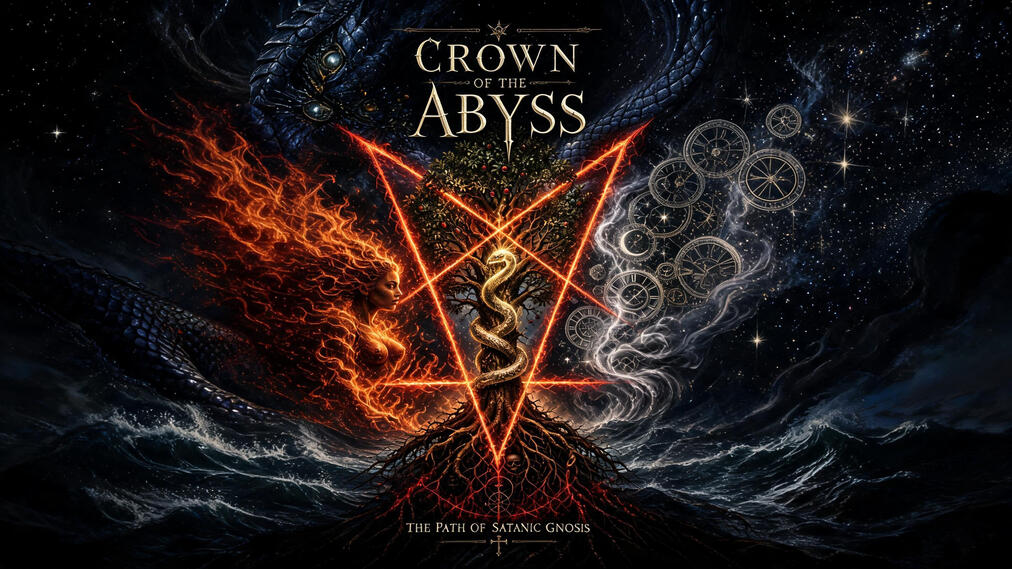
Crown of the Abyss is a direct, no-filter look at Theistic Satanism as a path of awakening, self-mastery, and spiritual independence. It pushes back against the idea of a controlled, ordered reality under the Demiurge and instead reframes Satan as something very different—not an enemy of truth, but the one who opened humanity’s eyes in the first place.This book pulls from the Nightside, the deep unknown, and that inner drive to become something more than what you were told to be. It’s built around knowledge, will, ritual, and taking responsibility for your own path. Along the way, it deals with the tension between being controlled and breaking free, what it actually means to stand on your own, and the kind of change that only comes through effort, discipline, and real insight.This isn’t meant to comfort you. It’s meant to challenge you. If you’re looking for something easy or reassuring, this probably isn’t it. But if you want to think for yourself, see things more clearly, and step outside the systems that keep people passive, then you’ll find something here.
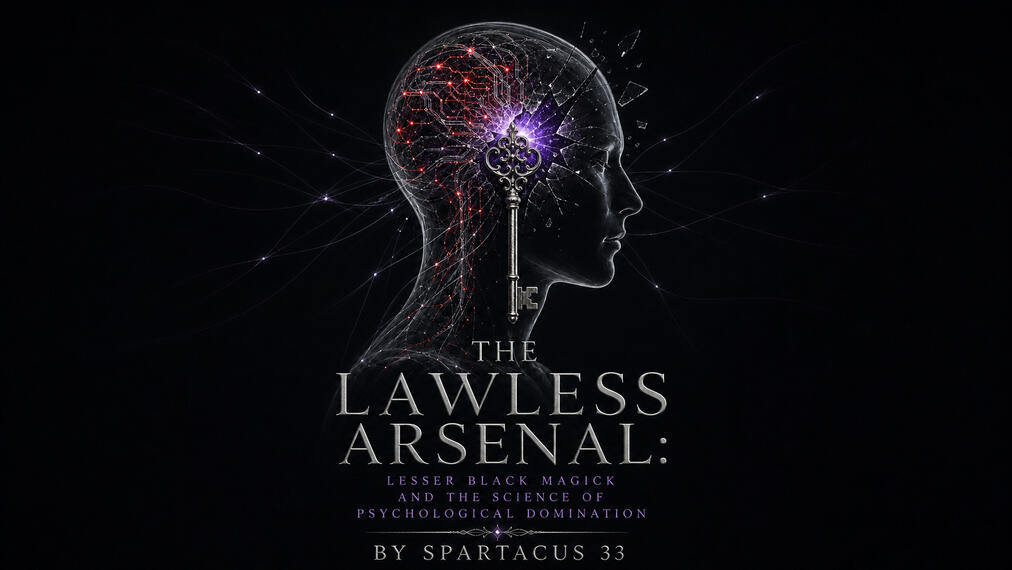
You already know you’re not here for comforting spirituality or “manifestation” clichés dressed up as magick. As you read this, you can begin to notice how much of what passes for occult today still leaves you stuck in the same place: half-understood ideas, moral hangovers from religion, and a constant sense that somebody else is quietly steering the room.The Lawless Arsenal goes straight at that. It treats lesser black magick as a working technology of psychology, influence, and control—showing you how people are shaped by patterns, conditioned responses, and unconscious scripts they never chose, and how those same patterns can be read, matched, and deliberately used. You’ll realize just how often “ordinary” interactions are anything but neutral once you see how language, gestures, and timing slip past resistance and land where decisions are actually made.This isn’t self-help and it isn’t written to make you feel safe. As you move through it, you start to see the cost of staying naïve: how easily authority gets projected, how meanings are assigned for you, and how quickly your will is bent when you don’t understand what’s happening beneath the surface. You commit to this work fully when you accept that influence itself is not good or evil—it’s a weapon, and the only real question is who’s using it and for what.The Lawless Arsenal is the doorway into a larger body of work built on the same refusal to play nice with the forces that shape you. As you follow this thread from book to book, you begin to see why you need the entire series: each text adds to your operational understanding of Satanism, occult philosophy, and real-world manipulation, moving you out of passivity and into clarity, power, and self-ownership. You can get every book now and treat the collection as your working toolkit—an arsenal you’ll really use when you decide you’re done being the one who gets influenced, and ready to become the one who does the shaping.
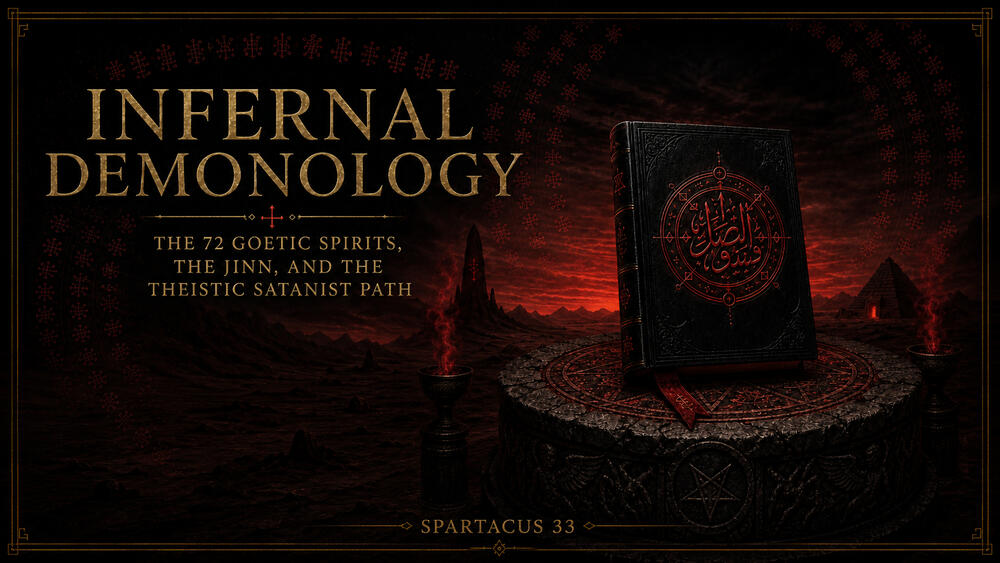
Infernal Demonology is a hands-on guide for people who take Satan, demons, and jinn seriously as real intelligences—not symbols, not psychology, and not horror clichés. It’s written from a Theistic Satanist perspective, and it pushes back against the fear-based ideas that have dominated demonology for centuries. Instead of paranoia or blind reverence, the focus here is on disciplined, intentional, and respectful practice.The book breaks down how different types of spirits—demons, devils, daemons, and jinn—fit into a larger current without treating them all as the same thing. It also takes a different approach to the 72 Goetic spirits, moving away from purely coercive, command-based methods and toward something more relational. These aren’t just forces to control, but intelligences you can actually learn from, work with, and build connections with over time.There’s a section on the jinn that sticks closer to their own traditions, treating them as beings with agency and their own nature, while also showing where their path overlaps with Satanic work—and where it doesn’t. From there, the focus shifts to major figures like Lilith, Lucifer, Beelzebub, Baphomet, and Azazel, not as abstract icons but as forces tied to specific ideas—refusal, illumination, power, duality, and forbidden knowledge—with practical ways to approach them.This isn’t just theory. It gets into how to actually do the work: setting up a space, approaching spirits without falling into either fear or arrogance, structuring rituals, and keeping yourself mentally and spiritually grounded over time. The goal isn’t just contact—it’s long-term practice that doesn’t burn you out or send you off balance.At the end of the day, this is for people who want to go deeper than aesthetics or surface-level “demon energy.” It’s for those who want a clear, workable path—something they can actually use—to build relationships, gain insight, and move forward in a way that’s intentional and grounded.
MORE TITLES BY SPARTACUS 33
Rex Mundis: The Bloodline of the Abyss is a direct, no-compromise take on the Satanic and Luciferian path as something much older and deeper than most people assume. It pushes back on the idea that Satanism is just a modern invention and instead treats it as part of an ongoing current tied to knowledge, sovereignty, and personal responsibility.The book leans into myth, ritual language, and a more grounded look at the material world, framing the Adversary not as a symbol of evil, but as a force connected to awareness, intelligence, and the reality we exist in. It also takes a clear stance against belief systems built on submission, challenging the idea of a “slave-god” and what that kind of thinking does to people.At its core, this is about a different way of relating to the spiritual path. Not obedience, not blind faith—but conscious engagement. Devotion here isn’t about lowering yourself; it’s about connection, strength, and change that actually means something in your life.

This isn’t about symbolism or surface-level rebellion. It’s about tearing yourself down and rebuilding with intention.This book cuts through the noise around Satanism—especially the fear, distortion, and pop-culture nonsense—and focuses on Theistic Satanism as a real, structured path. It’s written for people who aren’t interested in metaphors or aesthetics, but in direct experience. Here, Satan isn’t treated as an idea, but as an actual intelligence—something you engage with, learn from, and are challenged by.The core of the work is transformation, but not the kind that stays in your head. It’s about changing how you think, act, and carry yourself over time. The idea of the Black Flame runs through all of it—that sense of awareness and self-direction that separates you from just going through the motions of life.You’ll move through ideas like how to approach this path without falling into blind submission, how to actually use will in a practical way, and what it means to take full responsibility for your direction. There’s a strong focus on self-reliance, not as a slogan, but as something you live out—especially when it’s uncomfortable.This isn’t meant to be easy, and it’s definitely not passive. It asks you to take a hard look at yourself, question what you’ve accepted without thinking, and do the work to change it. Not for the sake of an image—but for something real.At the end of it, the message is simple: nothing is handed to you. Whatever you become, you build it yourself.

The Satanic Testament: The Doctrine of the Black Flame is a grounded look at Theistic Satanism as a path built on knowledge, self-mastery, and personal sovereignty.It moves away from the usual fear-driven ideas and surface-level takes, and instead presents Satan as something much more meaningful—not as a symbol of evil, but as a force tied to awareness, rebellion, and the pursuit of knowledge. The focus here is on breaking out of passive belief and stepping into something more deliberate and self-directed.Throughout the book, you’ll get into the core ideas behind the path: what the Black Flame actually represents, how knowledge and personal responsibility shape your development, and how to balance strength with awareness instead of falling into extremes. It also looks at demons not as something to fear, but as intelligences that can be learned from, along with a more grounded approach to devotion that’s based on connection rather than blind submission.There’s also a practical side to it—ritual, meditation, visualization, and ways to actually apply this in your life instead of just thinking about it. The goal isn’t to overwhelm you with theory, but to give you something you can work with over time.This isn’t about believing something because you’re told to. It’s about questioning, learning, and building your own understanding through experience.If you’re drawn to the idea of the Black Flame, this is meant to give you a clear starting point—and a path you can actually walk.
This book is really a working introduction to Theistic Satanism—not as an abstract belief system, but as something you actually engage with.At the center of it is a pretty direct idea: this path is about transformation through will, and through a real relationship with Satan as an active presence. Not symbolic, not psychological shorthand—something you interact with, test, and come to understand through experience.It starts with the foundation. What Theistic Satanism actually is, where it comes from, and how it connects back to older currents like Gnosticism. But it doesn’t stay in history for long. The point is to show how those ideas still function now—how they translate into something you can actually practice.From there, it moves into the core structure of the path. Personal responsibility comes up early, because without that, nothing else really works. Then it gets into development—discipline, intention, and yes, things like hexing. Not as edgy add-ons, but as part of a system where will has to be applied, not just talked about.There’s a strong emphasis on doing, not just understanding.So you get into the mechanics—how ritual actually works in practice. Setting up an altar. Making offerings. Using prayer in a way that isn’t passive. Working with cycles instead of ignoring them. It’s less “here’s what this means” and more “here’s how you use it.”The same goes for the entities discussed—Lilith, Lucifer, Beelzebub. They’re not treated like distant archetypes. The approach here is that they have distinct qualities, distinct roles, and that understanding comes from interaction, not just reading descriptions.As the book goes further, it starts pushing into heavier territory.How influence works. How power and philosophy intersect in real situations. What it actually means to take ownership of your path instead of borrowing someone else’s structure. And then the bigger questions—death, continuity, the idea of the “immortal ego.” Not framed in a comforting way, but in a way that forces you to think it through for yourself.The second half shifts gears a bit.Less explanation, more material you can use. Prayers, invocations, and writings that are meant to be worked with directly. It’s the difference between reading about a system and actually stepping into it.And that’s really the point of the whole thing.This isn’t here to hand you a finished belief system. It’s a framework. Something you can question, test, push against, and build on.What you end up doing with it—that part’s on you.